Most travelers come to Costa Rica for its beaches, rainforests, and pura vida lifestyle. But the real magic? It often starts after sunset.
If you’re the kind of traveler who craves meaningful adventure, something immersive, raw, and unforgettable, nighttime experiences in Costa Rica Night Tours deliver serious impact on emotion and memory. From experience knowledge of the land to wildlife encounters that feel almost cinematic, this is Costa Rica at its most authentic.
Night tours aren’t just excursions. They’re transformational experiences that connect culture, biodiversity, and conservation in one powerful narrative.

The Fascinating World of Frogs in Costa Rica
Costa Rica is a global hotspot for amphibians, hosting over 200 frog and toad species. Many of them are nocturnal, meaning night tours unlock access to an entirely different ecosystem.
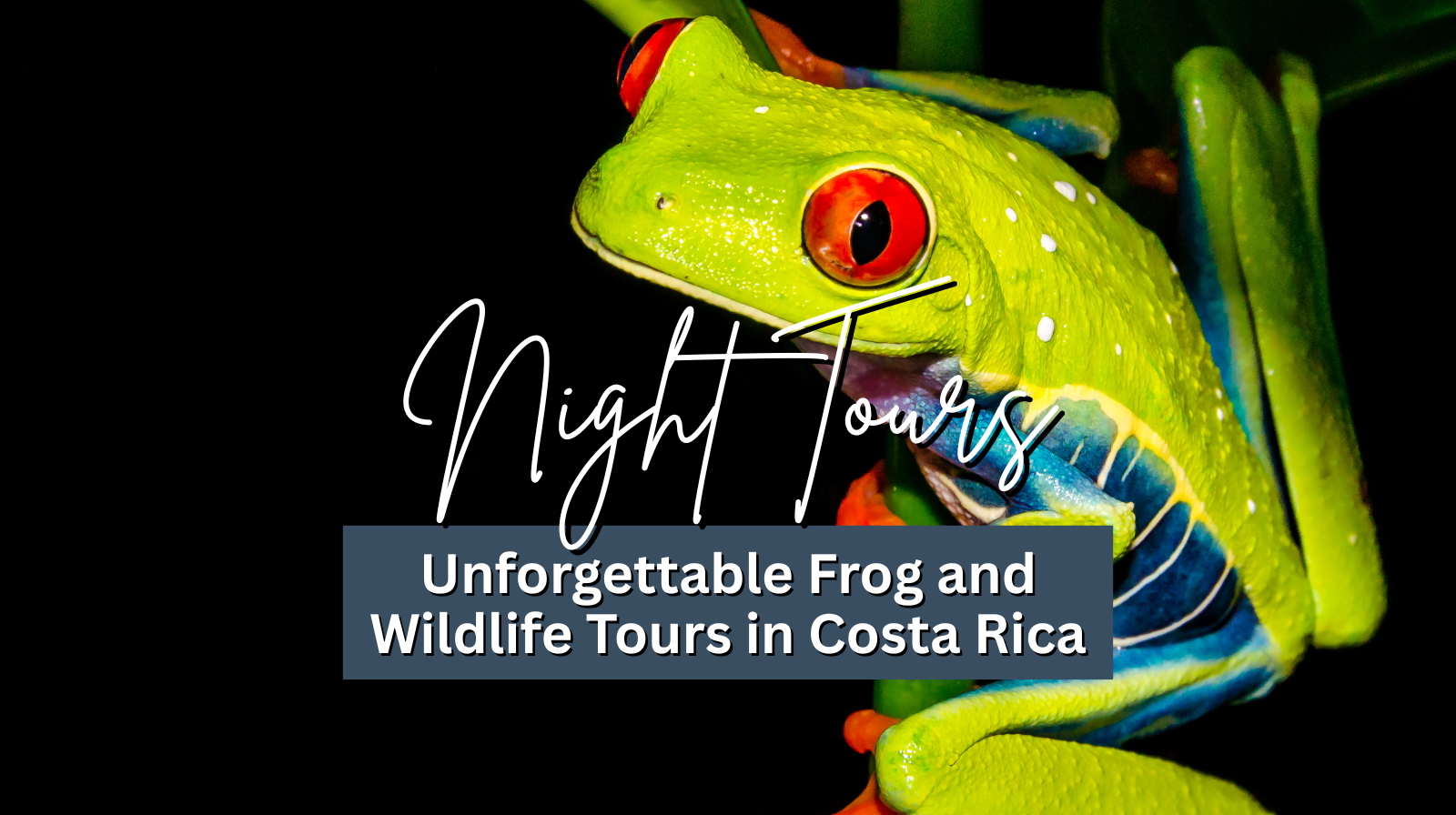
From the iconic red-eyed tree frog to tiny glass frogs perched on leaves like living crystals, frogs are more than wildlife, they’re bio-indicators of ecosystem health. Indigenous communities have long respected frogs as symbols of rain, fertility, and balance, making them culturally significant as well as biologically fascinating.
This is where science, storytelling, and spirituality intersect.
Wildlife: The Moving Stars of the Night
When darkness falls, the rainforest comes alive.
Nighttime wildlife tours spotlight:
- Tree frogs, poison dart frogs, and leaf frogs
- Snakes, including eyelash vipers and boas
- Insects, spiders, and bioluminescent fungi
- Nocturnal mammals like kinkajous, armadillos, and olingos
This is also prime herping territory, guided searches for reptiles and amphibians led by expert naturalists who know exactly where (and how) to look without disturbing the environment.
Think of it as a live documentary, minus the screen.

Best Locations for Nighttime Wildlife Tours
Costa Rica offers multiple high-impact locations for night tours, each with its own biodiversity profile:
Monteverde Cloud Forest: Misty Nights and Amphibian Diversity
Monteverde’s cloud forests are iconic for their ethereal mist and rich biodiversity. Night tours here reveal tree frogs, glass frogs, and rare snakes that are nearly invisible during the day. Trails wind through moss-covered trees and hanging bridges, giving every step a sense of adventure. Guided walks often include stories from local experience knowledge, connecting each sighting to the region’s ecology and folklore.
La Fortuna & Arenal: Volcano Views and Nocturnal Wonders
The Arenal region offers a unique combination of volcanic landscapes and dense rainforest, creating a perfect habitat for nocturnal species. Expect to spot poison dart frogs, kinkajous, owls, and night-active insects. Many tours also highlight the interplay between geothermal activity and local wildlife, making it a 360° sensory experience: sights, sounds, and even the smell of the forest at night.
Osa Peninsula: Maximum Biodiversity in the Wild
If your goal is to see rare and untouched species, the Osa Peninsula is the place. Home to Corcovado National Park, this region hosts a staggering diversity of frogs, snakes, mammals, and insects. Night tours often feel like entering a living laboratory, with guides sharing in-depth knowledge about species behavior, conservation challenges, and ecological practices.
Sarapiquí: Herping Paradise and Rainforest Immersion
Sarapiquí’s lowland rainforests are perfect for herping enthusiasts. Here, nocturnal tours focus on spotting frogs, toads, snakes, and other reptiles while learning how Indigenous communities use local species for medicine, food, and cultural rituals. The trails are easy to navigate, making it ideal for families or first-time night hikers.
Caribbean Lowlands (Tortuguero & Cahuita): Lush Soundscapes and Unique Frogs
The Caribbean coast offers a vibrant nocturnal soundtrack: the calls of frogs, insects, and birds create an immersive rainforest symphony. Species like red-eyed tree frogs, cane toads, and nocturnal birds make these tours unforgettable. Local guides often include cultural anecdotes, showing how local people interpret wildlife calls as messages from nature, blending storytelling with ecology.
Many local and rural communities offer guided night walks that combine wildlife spotting with local knowledge, adding cultural depth to the experience.

What to Expect on a Frog and Wildlife Tour
From an operational standpoint, most tours are:
Small-group or private tours
Most nighttime wildlife tours are conducted in intimate groups, often 4–10 people, which means you get personalized attention from your guide. Smaller groups make it easier to spot shy or rare species and allow for a quieter, more immersive experience, without disturbing the nocturnal ecosystem.
2 to 3 hours of guided exploration
Tours usually last a few hours, starting just after sunset. This timing maximizes your chances of seeing active nocturnal animals while letting you experience the forest’s transformation from day to night. Walks are paced deliberately to avoid missing tiny amphibians or insects hidden in plain sight.
Led by certified naturalist guides
Guides are not just walkers, they’re trained experts in Costa Rican biodiversity. They know exactly where to find elusive frogs, snakes, and other nocturnal creatures. Along the way, they share fascinating insights about behavior, ecosystem roles, and local conservation efforts.
Conducted on trails, reserves, or community lands
Tours often take place in protected reserves or Indigenous community lands, allowing access to undisturbed habitats. This ensures that encounters with wildlife are safe, ethical, and sustainable, while also giving you a peek into how locals interact with their environment.
Slow-paced, observational walks
The emphasis is on observation, not speed. Guides encourage you to stop, listen, and notice subtle movements, like a tiny glass frog perched on a leaf or the shimmer of bioluminescent insects. This approach trains your eyes and senses to pick up details that are often missed in daylight tours.
Use of headlamps or flashlights
Proper lighting is essential for spotting wildlife in the dark. Many tours use headlamps with red filters to minimize disturbance to animals while still illuminating their surroundings. You’ll also learn to spot reflective eyes and subtle movements in low light.
Educational insights into behavior, conservation, and folklore
Every encounter comes with a story, whether it’s about a frog’s mating call, a snake’s hunting technique, or how Indigenous communities view certain animals as symbols of health and prosperity. You leave the tour not just with photos, but with knowledge and a deeper connection to Costa Rica’s ecosystems.
A respectful, low-impact approach to wildlife observation
Guides emphasize ethical wildlife watching: no touching, no chasing, and no loud noises. This ensures the animals remain safe and undisturbed, while visitors enjoy a truly authentic experience.
This isn’t about rushing, it’s about presence and awareness.
Essential Gear for Nighttime Wildlife Watching
To maximize comfort and performance, come prepared:
- Lightweight long sleeves & pants
- Closed-toe hiking shoes (water-resistant preferred)
- Headlamp or flashlight (red light mode is a plus)
- Insect repellent (eco-friendly if possible)
- Camera or smartphone with low-light capability
Pro tip: Guides often carry spotting scopes and high-powered lights, so quality over quantity applies here.

The Importance of Eco-Tourism in Costa Rica
Imagine stepping into a rainforest just as night falls. The air is thick with the earthy scent of damp leaves, and the calls of frogs and insects create a symphony all around you. You’re not just a tourist here, you’re a witness to a delicate world, one that Indigenous communities and local guides have protected for generations.
In Costa Rica, eco-tourism isn’t just a trend, it’s a lifeline. Every guided night tour you join contributes directly to conservation efforts: maintaining trails, protecting frog habitats, and funding projects that restore ecosystems. You might spot a rare red-eyed tree frog, but that encounter is also a reminder that the forest thrives because people like you chose a responsible, respectful way to explore it.
And there’s more. Many tours are led by local and Indigenous guides, who share not only their expert knowledge of nocturnal creatures but also stories, traditions, and wisdom passed down for centuries. By choosing eco-tourism, you help sustain communities, honor culture, and ensure that these magical night walks remain available for generations of travelers to come.
In Costa Rica, your adventure doesn’t just leave footprints on trails, it leaves a positive mark on the forest, the wildlife, and the people who call it home.
Tips for Capturing Stunning Wildlife Photography
Low light doesn’t mean low quality, if you play it smart:
- Use macro mode for frogs and insects
- Avoid flash unless permitted (and use diffusers)
- Stabilize your camera or phone
- Let the guide position the light for optimal angles
- Focus on eyes and texture
Remember: sometimes the best capture is the memory itself.

Why You Should Experience Nighttime Wildlife Tours
Nighttime wildlife tours in Costa Rica offer a high-value, high-impact experience that blends adventure, education, and cultural respect.
They’re ideal for travelers who want:
- Authentic encounters
- Deeper connection with nature
- Experiences that go beyond surface-level tourism
If you’re looking to elevate your Costa Rica itinerary and engage with the country on a more meaningful level, this is a non-negotiable add-on.
Daytime shows you Costa Rica’s beauty.
Nighttime reveals its soul.
