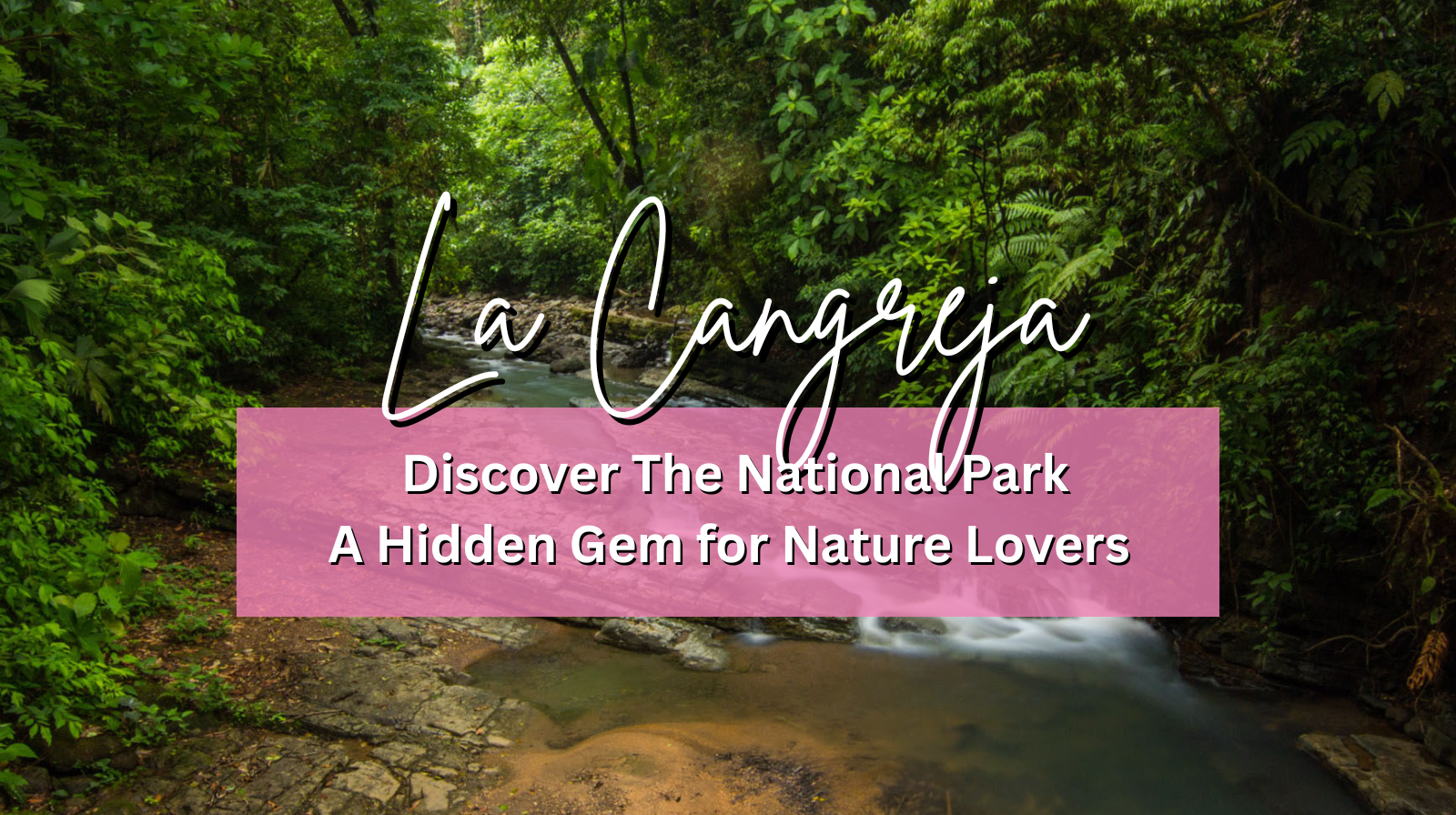
You feel it before you see it. The air cools, the road narrows, and the noise of everyday life fades behind you. La Cangreja National Park doesn’t try to impress, it invites you in.
If you’ve ever craved a place where nature still leads and humans simply follow, this is it. No crowds. No rush. Just rainforest breathing at its own pace, reminding you why Costa Rica became a global benchmark for conservation in the first place.

Location and Accessibility
La Cangreja sits quietly in Costa Rica’s Central Pacific region, stretching across Puriscal, Acosta, Mora, and Turrubares. From San José, the journey takes about two hours, but the transition feels much bigger.
As you climb into the hills, paved roads turn rough and the landscape turns wild. A 4×4 vehicle makes the trip smoother, especially during the rainy season, and honestly, that challenge keeps La Cangreja exactly how it should be: protected, raw, and uncrowded.

Unique Flora and Fauna
La Cangreja National Park stands out as one of Costa Rica’s most important rainforest conservation areas, not because it’s famous, but because it’s ecologically strategic. The park protects more than 2,700 hectares of primary and secondary tropical rainforest, forming a critical biological corridor between the Central Valley and the Pacific lowlands.
This corridor allows wildlife to move, migrate, and thrive, a key differentiator for biodiversity preservation in Costa Rica.
Rainforest Ecosystems and Plant Life
As you hike through La Cangreja, the forest shifts constantly. Towering hardwood trees dominate the canopy, while dense understory plants compete for light below. You’ll encounter:
- Mature tropical rainforest trees
- Ferns, palms, and climbing vines
- Medicinal plants traditionally used by local communities
- Mosses and epiphytes thriving in humid conditions
These forests play a direct role in water conservation, protecting rivers and watersheds that supply nearby towns. From an environmental standpoint, La Cangreja functions as both a carbon sink and a natural water filte, high ecological value, low human interference.
Wildlife of La Cangreja National Park
Wildlife sightings feel organic here because animals remain undisturbed. The park supports a wide range of mammals, reptiles, amphibians, and insects, many of which depend on large, continuous forest cover.
Commonly observed species include:
- White-faced capuchin monkeys
- Mantled howler monkeys
- Coatis
- Collared peccaries
- Agoutis
More elusive but present species include:
- Pumas
- Ocelots
- Margays
You may not see these predators, but their presence signals a healthy, functioning ecosystem.
Reptiles, Amphibians, and Microfauna
La Cangreja’s humid environment supports frogs, lizards, snakes, and countless insect species. During the rainy season, amphibian activity increases significantly, adding another layer of biodiversity for visitors interested in Costa Rica’s lesser-known wildlife.
This microfauna plays a crucial role in pollination, seed dispersal, and ecosystem balance, details that elevate the park’s conservation narrative.
Why This Biodiversity Matters
What makes La Cangreja special isn’t just what lives here, it’s why it still does. Limited access, low visitor numbers, and protected status allow ecosystems to function without pressure.

Activities for Nature Enthusiasts
La Cangreja National Park sits at a unique ecological crossroads between Costa Rica’s Central Valley and the Pacific lowlands, and that location directly shapes the experiences it offers. This isn’t a park designed for adrenaline, it’s built for immersion, observation, and connection.
Rainforest Hiking and Deep Nature Immersion
Hiking in La Cangreja feels purposeful. The park’s trails move through primary and secondary rainforest, across riverbeds, and into cooler mountain microclimates.
Because of its elevation and forest density, hikes here stay shaded and rich with sensory detail, bird calls overhead, leaves shifting underfoot, and constant movement in the canopy. This makes La Cangreja ideal for travelers interested in rainforest hiking in Costa Rica without the crowds found in more famous parks.
Wildlife Observation in a Low-Impact Environment
Thanks to its limited access and low visitor numbers, La Cangreja supports authentic wildlife watching. Animals behave naturally here, not conditioned to human presence.
Nature enthusiasts can spend hours spotting monkeys, tracking mammals by sound, or observing reptiles and amphibians along humid forest paths. The park’s location within a biological corridor significantly increases biodiversity density, improving wildlife observation opportunities year-round.
Birdwatching Across Multiple Ecosystems
La Cangreja’s position between the Central Valley and the Pacific creates overlapping ecosystems, a major advantage for birders.
Birdwatchers can observe forest species, edge-habitat birds, and migratory species within a single visit. Early morning hikes offer the best results, especially along river corridors and elevated forest sections where bird activity peaks.
This makes the park a strong alternative to better-known birding destinations in the Central Pacific region.
Waterfall Exploration and River Ecosystems
Water defines La Cangreja. The park protects key watersheds that feed surrounding communities, and those same systems create stunning natural features.
Hikes lead to waterfalls, natural pools, and river crossings where visitors can:
- Cool off after long hikes
- Observe aquatic life
- Photograph pristine freshwater ecosystems
These experiences feel remote and exclusive, reinforcing the park’s appeal for slow and sustainable travel.
Nature Photography and Landscape Observation
La Cangreja’s lighting, elevation, and dense forest structure make it ideal for nature and wildlife photography. Morning mist, filtered sunlight, and dramatic canopy layers create depth without effort.
Because there’s minimal infrastructure and signage, photographers can frame scenes without visual noise, a huge advantage for travelers looking to capture authentic Costa Rica landscapes.
Mindful Travel and Educational Exploration
This park naturally attracts travelers interested in mindful travel, conservation, and environmental education. Without distractions, visitors tune into ecological details, plant structures, animal behavior, and forest dynamics.
Guided hikes often focus on:
- Medicinal plants
- Forest regeneration
- Water conservation
- Biodiversity protection
Hiking Trails and Scenic Views
The most iconic hike leads to La Cangreja Waterfall, and it earns every step.
You cross rivers, navigate roots, and move deeper into the forest until the sound of falling water grows louder. Then it appears: a powerful cascade pouring over smooth rock walls into a natural pool below.
Other trails climb toward elevated viewpoints, offering sweeping looks over untouched forest. Some sections challenge your legs. All of them reset your mind.

Birdwatching Opportunities
Mornings belong to the birds here.
As the sun rises, flashes of color cut through the trees. Scarlet macaws pass overhead. Motmots perch patiently. Trogons, hawks, and tanagers fill the forest with movement and sound.
La Cangreja supports both resident and migratory species, making every visit unpredictable, and that’s exactly the appeal. This is birdwatching without crowds or competition, just you and the rhythm of the forest.
Conservation Efforts and Environmental Importance
Beyond its beauty, La Cangreja plays a critical role behind the scenes.
The park protects key water sources that supply surrounding communities and safeguards forest cover that regulates climate and biodiversity. Costa Rica’s national park system manages it with one priority in mind: ecosystem integrity over tourism volume.
That decision is why La Cangreja still feels untouched.
Tips for Visiting La Cangreja National Park
A little preparation goes a long way:
- Visit during the dry season (December to April) for easier access
- Wear proper hiking shoes, the terrain stays wild
- Bring water, snacks, insect repellent, and rain protection
- Start early to catch wildlife at its most active
- Hire a local guide if you want deeper insight into the forest’s hidden stories
Nearby Attractions and Accommodations
Nearby towns like Puriscal and Acosta offer rural lodges, eco-stays, and farm accommodations that match the park’s low-impact spirit.
Between hikes, you can explore waterfalls, visit coffee farms, or simply enjoy mountain views that remind you how much space Costa Rica still protects.

Why La Cangreja Should Be on Your Travel List
La Cangreja National Park doesn’t compete with Costa Rica’s famous destinations, it complements them.
It’s the place you go when you want something quieter, deeper, and more personal. A place that asks nothing from you except attention.
If your idea of travel has evolved beyond checklists and crowds, La Cangreja isn’t just worth visiting, it’s worth feeling.
