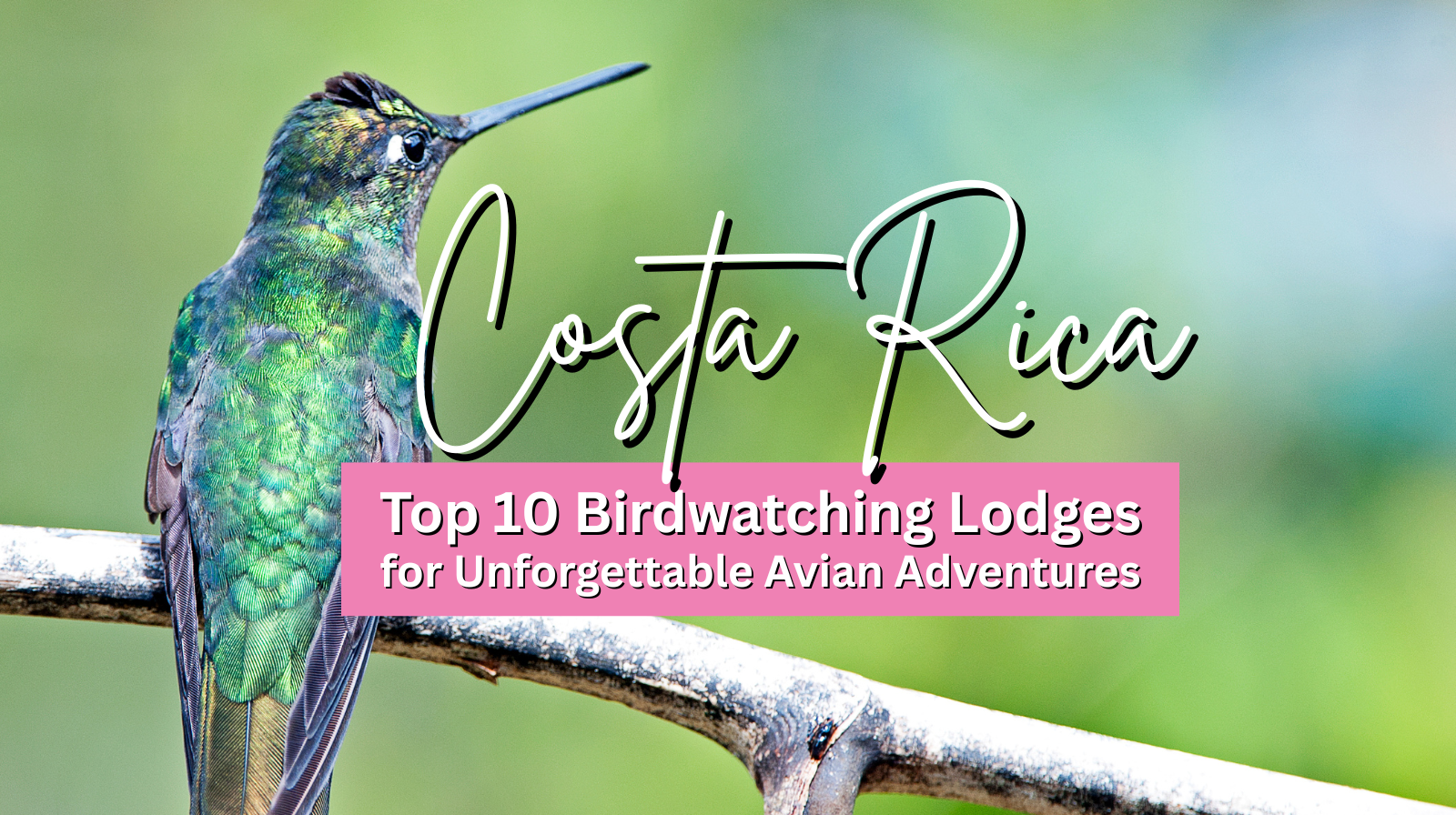
Are you ready to embark on a breathtaking journey through the lush landscapes of Costa Rica, where vibrant plumage dances against the backdrop of verdant forests? For avid birdwatchers and nature enthusiasts alike, this Central American gem offers a remarkable array of avian adventures that are simply unforgettable. Costa Rica is home to an astonishing diversity of bird species, from the elusive resplendent quetzal to the majestic scarlet macaw, making it a true paradise for bird lovers. In this article, we’ll unveil Costa Rica’s Top Birdwatching Lodges, highlighting the best places to stay for an immersive experience. Whether you prefer rustic lodges nestled in the jungle or upscale retreats overlooking misty mountains, each destination promises not just comfort but access to some of the finest birdwatching opportunities in the world. Pack your binoculars, and let’s explore the enchanting world of Costa Rican avifauna together!

Overview of Costa Rica’s Avian Diversity
Costa Rica might be small, but it’s a heavyweight in the birding world. Over 900 species call the country home, from toucans and tanagers to scarlet macaws and the elusive resplendent quetzal. Its two coastlines, volcanic ranges, cloud forests, and wetlands create a patchwork of habitats that pack in a staggering amount of biodiversity. The diversity of microclimates means you can wake up to the calls of howler monkeys in the Caribbean lowlands, then head into cool mountain cloud forests by afternoon to spot high-elevation species like the quetzal.
Criteria for Choosing the Top 10 Birdwatching Lodges
Costa Rica’s Top birdwatching lodges share three traits:
- Direct access to habitat – trails, gardens, forest edges, or wetlands right outside your room.
- Experienced guides – many lodges have on-site naturalists who know local birds by call.
- Comfort and location – proximity to hotspots saves you hours on bumpy roads, giving you more dawn and dusk birding time.
Look for stays that support local conservation or have reforestation programs—you’re not just spotting birds, you’re helping keep their habitat intact.
My list of Costa Rica’s Top Birdwatching Lodges
Costa Rica’s Top Birdwatching Lodges are some of the best bases for birdwatchers looking to get the most out of their trip:
1. Hotel Quelitales – Cartago Highlands

Perched at roughly 5,200 ft (1,585 m) near Tapantí National Park, Hotel Quelitales offers a cool cloud forest climate with temperatures ranging 60–75°F (15–24°C). Misty mornings roll through lush gardens that attract dozens of hummingbird species, including the striking purple-throated mountain-gem. Birders also have a strong chance of spotting the resplendent quetzal, emerald toucanet, and tanagers that thrive in this high-elevation ecosystem. Click here to book your room.
2. Tifakara Boutique Hotel & Birding Oasis – La Fortuna

Located at the base of Arenal Volcano at around 1,000 ft (305 m), Tifakara enjoys a warm rainforest climate with temperatures between 70–88°F (21–31°C). Guests can birdwatch directly from the property’s forested trails and feeders, where you’ll find collared aracaris, Montezuma oropendolas, and several toucan species. The proximity to Arenal National Park means plenty of opportunities to see great curassows and colorful manakins on guided excursions. Click here to book your room
3. Macaw Lodge – Carara Region

Nestled at 800 ft (244 m) in a transitional rainforest ecosystem, Macaw Lodge is the ideal blend of dry and wet forest habitats, perfect for spotting species from both. Temperatures hover around 75–90°F (24–32°C) year-round. Expect to see scarlet macaws gliding overhead, along with turquoise-browed motmots, trogons, and black-hooded antshrikes along the extensive network of reforested trails. Click here to book your room.
4. Cerro Lodge – Tarcoles & Carara Corridor

Set near the Tarcoles River at 500 ft (152 m) elevation, Cerro Lodge sits within dry tropical forest that bursts with life at sunrise. With daily highs between 80–95°F (27–35°C), mornings are prime for watching scarlet macaws fly by in pairs. Nearby mangroves host boat tours where you can spot boat-billed herons, roseate spoonbills, and kingfishers, while the lodge gardens attract motmots and parakeets. Click here to book your room.
5. Selva Verde Lodge – Sarapiquí Lowlands

At just 225 ft (68 m) above sea level, Selva Verde sits in a humid lowland rainforest with average temperatures of 75–88°F (24–31°C) and regular rainfall, making it one of Costa Rica’s richest birding hotspots. The lodge’s private trails regularly deliver sightings of keel-billed toucans, trogons, and the endangered great green macaw. Night walks can reveal nocturnal birds like the spectacled owl and pauraque. Click here to book your room.
6. La Laguna del Lagarto Eco-Lodge – Boca Tapada

This remote lodge lies around 300 ft (91 m) in wetlands and secondary rainforest, with warm humid conditions averaging 74–87°F (23–30°C). It is famous for its feeders that attract collared aracaris, great curassows, and even the rare king vulture. The surrounding lagoons are perfect for watching jacanas, herons, and green ibis. Click here to book your room.
7. Botanika Osa Peninsula – Puerto Jiménez

Located at sea level in one of the most biologically diverse places on the planet, Botanika offers access to the humid rainforest of the Osa Peninsula. Temperatures hover 77–92°F (25–33°C) year-round. Guests may spot red-capped manakins, black-cheeked ant-tanagers (endemic to the Osa), and white hawks. Scarlet macaws are nearly guaranteed, and lucky visitors might glimpse a harpy eagle. Click here to book your room.
8. Danta Corcovado Lodge – Osa Peninsula

Also near sea level, Danta Corcovado is a rustic gem for those seeking immersion in primary rainforest. Its hot, humid climate creates perfect conditions for spotting antbirds, tinamous, woodcreepers, and mixed-species feeding flocks that move through the understory. Birders willing to hike deeper into the forest may encounter trogons, manakins, and perhaps a crested guan or great curassow. Click here to book your room.
9. Parrot Suite: Encantada Arenal – Volcano Foothills

This boutique, adults-only stay sits at 1,050 ft (320 m) in a lush rainforest ecosystem with temperatures from 70–86°F (21–30°C). Parrots, toucans, and honeycreepers frequent the property, making it easy to birdwatch from your room’s balcony. Guided tours in the surrounding area might reveal white hawks, laughing falcons, and the occasional ornate hawk-eagle. Click here to book your room.
10. Arte de Plumas Birding Lodge – Tayutic Highlands

At around 4,600 ft (1,400 m), this lodge provides a cool cloud forest environment with temperatures between 58–72°F (14–22°C), often wrapped in mist. The highlight here is the resplendent quetzal, but birders can also expect to see golden-browed chlorophonias, fiery-throated hummingbirds, and mixed flocks of warblers and tanagers that thrive in the high-elevation canopy. Click here to book your room.
Essential Birdwatching Gear for Your Trip
- Binoculars: 8×42 or 10×42 give a bright, steady image.
- Field Guide or App: Merlin Bird ID or a physical Costa Rica bird book.
- Camera Gear: Telephoto lens (at least 300mm) if you want crisp shots.
- Clothing: Neutral-colored quick-dry clothing, hiking shoes, a wide-brim hat, and a lightweight rain jacket.
- Other Must-Haves: Reusable water bottle, insect repellent, sunscreen, and a headlamp for pre-dawn bird walks.
Best Times of Year for Birdwatching in Costa Rica
- Dry Season (Dec–Apr): Best trail conditions, clearer skies, easy access to remote areas.
- Green Season (May–Nov): Lush landscapes, fewer tourists, good for nesting species. Expect daily showers, especially in the afternoons.
- Migration Windows: September–October for raptors, shorebirds, and warblers moving south.
Local Guides and Birdwatching Tours
Investing in local expertise pays off. Guides can spot and identify birds by sound alone, and many know where specific species are currently nesting or feeding. Some lodges offer early morning birding tours and night walks to spot owls and other nocturnal wildlife.
Transportation & Travel Tips
- Renting a Car: Gives flexibility to visit multiple birding hotspots, especially remote ones. A 4×4 is useful in the rainy season.
- Domestic Flights: If visiting both Osa Peninsula and Arenal/Sarapiquí, consider flying with Sansa to save time.
- Safety: Costa Rica is one of the safest countries in Central America, but still take usual precautions—don’t leave gear in the car, lock valuables, and use hotel safes.
- Budgeting: Mid-range birding lodges run $100–$250 per night per couple. Luxury eco-lodges can exceed $400 per night, but often include meals and guided tours.
Conservation Efforts and Responsible Birdwatching
Your stay can directly support conservation. Many lodges, like Macaw Lodge, are involved in reforestation projects. Practice low-impact birding: stay on trails, keep voices low, avoid feeding wildlife, and respect nesting sites.
Suggested Itinerary for a Birding-Focused Vacation
Costa Rica’s rich biodiversity makes it a dream destination for birdwatchers. This 7-day itinerary highlights iconic species, immersive trails, and lodge stays while now including the Orosi Valley and Los Quetzales National Park for more highland birding experiences.
Day 1: Arrival in San José & Transfer to Orosi Valley
- Morning/Afternoon: Land at Juan Santamaría International Airport and transfer to the Orosi Valley (1–2 hours).
- Day: Explore Orosi River trails and gardens, spotting species like tanagers, motmots, and hummingbirds.
- Evening: Stay at a lodge with scenic valley views and enjoy the sounds of early morning bird calls for tomorrow’s adventure.
Day 2: Orosi Area & Los Quetzales National Park
- Early Morning: Hike in Orosi Valley’s coffee plantations and forest fragments for highland bird species.
- Late Morning/Afternoon: Transfer to Los Quetzales National Park, home to resplendent quetzals and trogons. Trails like Pejibaye and Los Quetzales lookout points provide excellent spotting opportunities.
- Evening: Overnight at a lodge near Los Quetzales to maximize early morning quetzal activity.
Day 3: Monteverde Cloud Forest
- Morning: Drive to Monteverde (2–3 hours).
- Day: Guided hikes on trails like Sendero Bosque Nuboso and Sky Walk for resplendent quetzals, bellbirds, and hummingbirds.
- Evening: Optional night walk to spot nocturnal species.
Day 4: Rio Savegre Valley
- Morning: Travel to Rio Savegre (1–2 hours).
- Day: Hike trails in this cloud forest valley to see quetzals, trogons, and tanagers. Early mornings are ideal for bird activity along streams and rivers.
- Evening: Stay at a riverside lodge to be ready for sunrise birding.
Day 5: Carara National Park & Coastal Birds
- Morning: Transfer to Carara National Park (3–4 hours).
- Day: Explore Laguna Meandrica and forest trails to spot scarlet macaws, toucans, and flycatchers.
- Late Afternoon: Relax at a nearby eco-lodge or capture sunset shots of macaws at roosting sites.
Day 6: Tortuguero National Park
- Early Morning: Travel to Tortuguero (drive + boat, ~4 hours).
- Day: Guided boat tour through canals for water-loving birds like kingfishers, herons, motmots, and parrots.
- Evening: Optional night tour to observe nocturnal birds like potoos and owls.
Day 7: Return to San José & Departure
- Morning: Optional early birding near the lodge.
- Midday: Fly or drive back to San José.
- Afternoon: Last-minute souvenir shopping or a city stroll if time allows.
- Evening: Depart Costa Rica.
Tips for a Highland & Lowland Birding Mix
- Orosi & Los Quetzales: Perfect for highland species, including quetzals, trogons, and highland tanagers.
- Monteverde & Rio Savegre: Cloud forests offer both highland and mid-elevation species.
- Carara & Tortuguero: Lowland forests and wetlands bring macaws, toucans, and waterbirds.
- Start early: Birds are most active at sunrise, especially in highland areas.
- Local guides: Hiring guides in Orosi and Los Quetzales is highly recommended—they know the best quetzal viewing spots.
Planning Your Avian Adventure in Costa Rica
These Costa Rica’s Top Birdwatching Lodges offer the diversity of an entire continent packed into one small country. Choosing the right mix of locations lets you see dozens—sometimes hundreds—of species in a single trip. With the right gear, a thoughtful itinerary, and a good guide, you’ll return with memories, photos, and maybe a new favorite bird.
