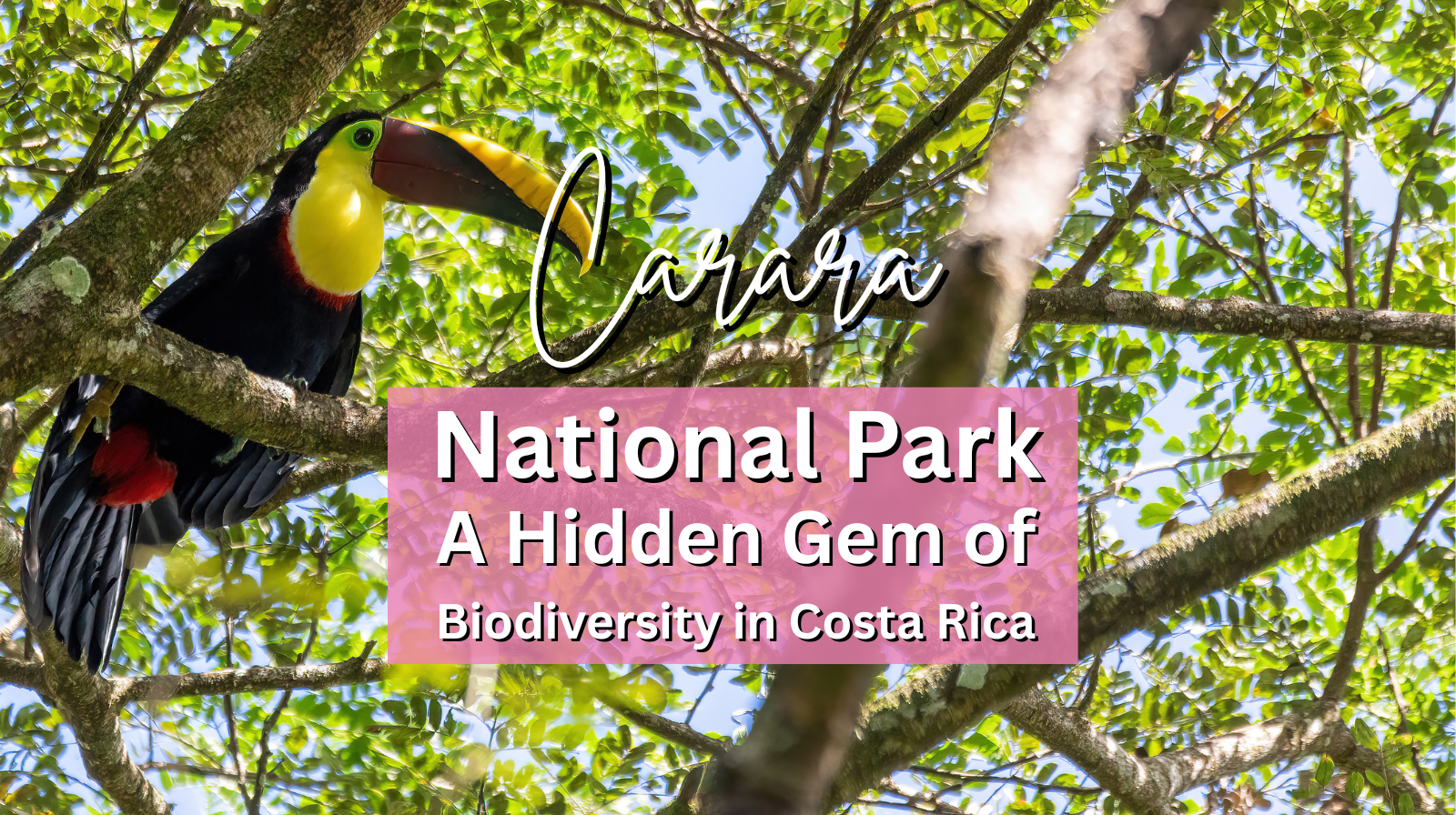
If you’ve ever driven along Costa Rica’s Pacific coast highway, that winding road from San José to Jaco, chances are you’ve unknowingly passed by one of the country’s quiet wonders — Carara National Park. Tucked just north of the Tarcoles River, this park is often overlooked by travelers speeding toward the beaches, yet it holds one of the most unique ecosystems in all of Central America.
Carara isn’t about flashy tourist crowds or manicured viewpoints — it’s about raw, living nature. Here, two worlds meet: the lush rainforests of the southern Pacific and the drier tropical forests of the north. This meeting point, known as a transitional forest, creates an incredibly rich environment where species from both climates overlap. The result? A living, breathing biodiversity bridge — home to scarlet macaws, howler monkeys, sloths, poison dart frogs, and hundreds of other creatures who call this mosaic of life home.
But what truly makes Carara special is its rhythm. As you walk along the shaded trails, the air hums with the buzz of cicadas and the soft calls of distant birds. Scarlet macaws often fly overhead in brilliant pairs, their colors cutting through the green canopy like brushstrokes. It’s a place that feels alive in every direction — not just a park, but an invitation to slow down and notice what most people drive right past.
So whether you’re a wildlife enthusiast, a casual hiker, or simply someone who wants to experience the real Costa Rica — unfiltered and untamed — Carara National Park might just surprise you.

The Unique Ecosystem of Carara National Park
Carara isn’t just another national park — it’s a crossroads of nature. What makes it truly fascinating is its location right on the biological border between Costa Rica’s dry tropical forest to the north and the humid rainforest to the south. This rare overlap creates what scientists call a transitional forest, but what you’ll feel as a visitor is more like walking between two different worlds that have learned to coexist.
On one side, you’ll see tall trees draped in moss and vines, with thick green undergrowth that smells like rain and earth. On the other, the forest opens up into lighter, drier woodlands where sunlight filters through golden leaves. The contrast happens almost seamlessly — you can literally walk from one ecosystem to the other in a matter of minutes.
This blend of habitats attracts an astonishing diversity of life. It’s one of the reasons why Carara is considered one of the most biodiverse spots on Costa Rica’s Pacific coast. The park is small compared to giants like Corcovado or Tortuguero, but within its 5,000 hectares, it shelters species from both climates — animals and plants that wouldn’t normally share the same territory anywhere else.
You might spot a troop of white-faced capuchins chattering in the dense canopy, then moments later, hear the raucous call of scarlet macaws circling overhead. Down by the Tarcoles River, iguanas bask on rocks while American crocodiles lurk lazily in the shallows. It’s the kind of place where every sound and shadow seems to hold a story.
Even the air feels different here — heavy with moisture in one moment, then crisp and dry the next. And that constant shift is what keeps the forest alive and thriving. Carara’s ecosystem teaches balance; it shows how variety, not uniformity, makes life resilient.

Flora and Fauna: A Biodiversity Hotspot
Carara National Park might be small on the map, but when it comes to biodiversity, it’s one of Costa Rica’s most remarkable natural treasures. The name Carara comes from the Huetar word meaning “river of lizards,” and it fits perfectly — because this park teems with life at every turn.
Let’s start with the park’s showstoppers: the scarlet macaws (Ara macao). Their brilliant red, blue, and yellow feathers light up the sky as they soar between the trees, especially during the early morning and late afternoon. Carara is one of the last strongholds for these majestic birds in the Central Pacific region — and seeing a pair glide overhead is pure magic.
But the macaws are just the beginning. Over 400 bird species have been recorded here, making Carara a dream destination for birdwatchers and photographers alike. You might spot toucans, motmots, trogons, and tanagers, or hear the echoing song of the black-hooded antshrike hidden deep in the foliage. The variety of birdlife alone could fill an entire checklist — and many visitors come back year after year to spot new species.
The mammals here are equally captivating. Keep your eyes open for white-faced capuchin monkeys, howler monkeys, and the shy collared peccaries that rustle through the undergrowth. If you move quietly, you might even catch sight of a sloth curled up in the canopy, or the flicker of an ocelot prowling in the shadows.
Down closer to the ground, Carara’s reptiles and amphibians steal the show. The park’s wetlands and riverbanks are home to green iguanas, Basilisk lizards (often called “Jesus Christ lizards” for the way they run across water), and some of the largest American crocodiles in Central America — especially near the famous Tarcoles River Bridge.
The plant life is just as rich and varied. Towering ceiba trees, giant ficus, and mountain almond trees form the backbone of the forest, while the ground bursts with ferns, orchids, and colorful bromeliads. Each layer of the forest — from the canopy to the leaf litter — supports a different web of life.
What’s most fascinating is how everything connects. The old trees provide nesting spots for macaws, their roots stabilize the soil along the river, and the fruit they drop feeds mammals and birds alike. Carara is a living classroom in ecological harmony, showing just how intertwined life becomes in such a small but vital space.
For nature lovers, photographers, or anyone who simply wants to experience Costa Rica’s wild heart, Carara National Park offers a taste of the country’s incredible biodiversity — all within easy reach of San José and Jaco.

Best Time to Visit Carara National Park
One of the best things about Carara National Park is that you can visit it year-round, but depending on the season, the experience feels a little different — each with its own charm.
If you’re hoping for sunny skies and easy hiking, the dry season (December to April) is your best bet. The trails are drier, and you’ll have better lighting for photos — especially for capturing those scarlet macaws flying overhead. This is also the most popular time for travelers exploring Costa Rica’s Pacific coast, so it’s easy to plan a day trip from San José, Jaco, or Manuel Antonio.
The green season (May to November), on the other hand, offers a whole different kind of beauty. The forest feels more alive — greener, denser, and humming with life. Rain showers usually come in the afternoon, leaving the mornings fresh and quiet, perfect for wildlife spotting. This is also when frogs, insects, and migratory birds are most active. And because there are fewer visitors, you get a more peaceful, intimate experience with nature (plus lower hotel rates nearby).
No matter when you visit, it’s best to arrive early in the morning — around 7 or 8 a.m. The wildlife is most active then, and the light filtering through the trees gives everything a soft, golden glow. By midday, the forest tends to quiet down as animals retreat from the heat.
If you love photography, birdwatching, or simply the calm of a forest waking up — trust me, an early start at Carara is worth it.

Hiking Trails and Adventure Activities
Exploring Carara National Park is all about slowing down and letting the forest reveal itself, one step at a time. The park isn’t huge, but its well-maintained trails make it one of the most accessible wildlife experiences in Costa Rica — perfect whether you’re a seasoned hiker or just in the mood for a peaceful nature walk.
There are two main trails worth exploring:
1. The Universal Access Trail (Sendero de Acceso Universal):
This is the most popular and easiest route — a short, 1.2 km loop with paved pathways and gentle terrain, ideal for families, kids, and visitors with limited mobility. Don’t let its simplicity fool you, though — this trail winds through lush secondary forest, where you can often spot capuchin monkeys, agoutis, and a kaleidoscope of butterflies fluttering around the undergrowth. Along the way, you’ll also find educational signs explaining the forest’s ecosystems, making it a great introduction to Carara’s biodiversity.
2. The Quebrada Bonita Trail (Sendero Quebrada Bonita):
If you’re up for a bit more adventure, this 4.5 km trail takes you deeper into the heart of the rainforest. The path loops through primary forest and along a small stream, where you’ll hear the rustle of lizards darting across leaves and the distant calls of howler monkeys echoing through the canopy. Keep your eyes sharp — this is prime territory for scarlet macaws, motmots, and even the occasional sloth.
For photographers and nature enthusiasts, every turn feels like a potential discovery. The dense vegetation creates soft lighting that’s perfect for capturing wildlife up close — especially in the morning when the air is still and birds are most active.
If you’re craving something a little more thrilling, consider adding a Tarcoles River boat tour to your itinerary after your hike. It’s just minutes from the park entrance and offers a chance to see massive crocodiles, waterbirds, and sometimes even basilisk lizards sprinting across the river’s surface.
Between the shaded trails, gentle sounds of the forest, and easy access to the Tarcoles River, Carara National Park offers that rare balance — peaceful exploration with a dash of adventure. It’s the kind of place that reminds you that “eco-tourism” doesn’t have to mean strenuous hikes — sometimes, it’s simply about walking slow enough to notice what’s already around you.

Birdwatching in Carara: A Paradise for Bird Lovers
If you’re into birdwatching in Costa Rica, Carara National Park is one of those places that will completely steal your heart. It’s often called a birdwatcher’s dream, and for good reason — with more than 400 bird species recorded, it’s one of the most diverse avian habitats in the country.
The park’s location at the meeting point between dry tropical forest and humid rainforest means birds from both ecosystems thrive here. It’s like two worlds blending into one — and every visit feels like a treasure hunt with wings.
The undeniable stars of the show are the scarlet macaws (Ara macao). Their loud, playful squawks echo through the trees as they fly in colorful pairs over the canopy. Early mornings and late afternoons are the best times to catch them, especially near the Tarcoles River and the Quebrada Bonita Trail. Watching them feed on mountain almond trees or glide over the river at sunset is something you won’t forget — it’s pure Costa Rica magic.
But macaws are just the beginning. Carara is also home to toucans, parrots, flycatchers, motmots, jacamars, and the beautifully shy rufous-tailed jacamar. If you’re lucky, you might even spot the orange-collared manakin performing its quick, dance-like courtship display in the underbrush — a favorite among photographers and seasoned birders alike.

Because the trails are relatively short and shaded, Carara is perfect for slow, mindful birdwatching. Bring binoculars, wear neutral colors, and most importantly, move quietly. The forest rewards patience. Even sitting still for a few minutes can bring surprises — like a hummingbird hovering near a heliconia flower or a pair of motmots perched together on a low branch.
If you want to make the most of your visit, consider joining a guided birdwatching tour. Local naturalists know exactly where to look for the more elusive species, and their trained eyes can help you spot birds you might otherwise miss. Many tours also include a visit to the Tarcoles River, where you can see waterbirds, herons, egrets, and kingfishers up close.
Whether you’re a lifelong birder or just someone who loves beautiful moments in nature, Carara National Park is one of the top spots for birdwatching in Costa Rica — easy to reach, endlessly rewarding, and full of color in every sense of the word.

Conservation Efforts and Ecotourism in Carara
What makes Carara National Park stand out isn’t just its beauty — it’s the way it quietly represents the balance between conservation and ecotourism in Costa Rica. Though it’s smaller than other well-known reserves, Carara plays an outsized role in protecting the delicate ecosystems along the Central Pacific Corridor, especially for species like the scarlet macaw and American crocodile.
Before it became a national park in 1978, this area was heavily impacted by farming and logging. But once protected status was granted, nature began to reclaim the land — and today, Carara stands as a powerful example of how quickly biodiversity can rebound when given a chance. The park is now one of the last remaining transitional forests in Costa Rica, providing a safe haven for countless species that would otherwise lose their habitat.
Carara’s approach to sustainable tourism is refreshingly simple: protect first, enjoy second. The park limits visitor numbers, maintains clearly marked trails to minimize disturbance, and encourages visitors to explore responsibly — no feeding animals, no loud music, no littering. It’s this balance that allows travelers to enjoy the park while keeping it thriving for future generations.
One of the most inspiring efforts here involves the scarlet macaw conservation programs. These vibrant birds once faced steep population declines due to habitat loss and the illegal pet trade. Thanks to the park’s protection of mountain almond trees — their main nesting and feeding source — macaw populations have made a remarkable comeback. Seeing them fly free across the sky now feels like witnessing hope in motion.
Beyond the wildlife, Carara supports local communities through guided tours, conservation education, and eco-friendly initiatives that create jobs without damaging the environment. Many local guides grew up around the park and have dedicated their lives to protecting its wonders. Their knowledge adds depth to every hike — it’s one thing to see a toucan, and another to learn how its feeding habits help the forest regenerate.
Visiting Carara isn’t just about sightseeing — it’s about being part of a bigger story of Costa Rica’s commitment to conservation. Every ticket, every photo, and every step taken respectfully on the trails helps sustain this living sanctuary.

Tips for Visiting Carara National Park
A visit to Carara National Park is an easy and rewarding day trip, especially if you’re coming from San José, Jaco, or Manuel Antonio. Still, a few smart tips can make your experience smoother and more enjoyable — and help you see more wildlife along the way.
1. Get there early.
Wildlife in Carara is most active in the early morning. Arriving between 7:00 and 8:00 a.m. gives you the best chance to spot monkeys, birds, and other animals before the heat kicks in.
2. Bring binoculars and a good camera.
This park is a birdwatcher’s paradise — but many species like to stay high up in the canopy. A pair of binoculars (and a bit of patience) makes all the difference.
3. Wear comfortable clothes and closed shoes.
Even though the trails are well-maintained, it’s still tropical rainforest terrain — a little muddy in the green season and full of curious insects. Light, breathable clothing, long pants, and sturdy shoes are your best bet.
4. Don’t forget water and snacks.
There’s no food sold inside the park, so pack a reusable water bottle and something light to eat. Just remember — feeding wildlife is a big no-no.
5. Hire a local guide.
You can absolutely explore on your own, but guides know the park inside out. They can spot camouflaged creatures you’d never notice and share stories about the forest’s history, ecology, and conservation efforts.
6. Visit the Tarcoles River Bridge afterward.
Just a few minutes north of the park entrance, this bridge offers a jaw-dropping view of massive American crocodiles lounging below. You’ll often find locals selling fresh coconuts or souvenirs nearby — it’s a fun quick stop.
7. Respect the silence.
Carara isn’t about rushing — it’s about tuning in. Move slowly, speak quietly, and let the forest’s natural rhythm guide you. It’s the best way to experience the park’s real magic.
8. Check the weather and park hours.
The park is usually open from 8:00 a.m. to 4:00 p.m., though it’s always wise to confirm before heading out. In the rainy season, bring a light poncho and a waterproof bag for your electronics.
Visiting Carara National Park is straightforward and peaceful — no long hikes, no crowds, just pure connection with nature. With a bit of preparation, you’ll walk away with memories (and photos) that feel like your own secret piece of Costa Rica’s wild heart.

Nearby Attractions and Accommodations
Carara National Park’s central location on Costa Rica’s Central Pacific coast makes it an easy addition to almost any travel itinerary. Whether you’re coming from San José, Jaco, or even Manuel Antonio, there are plenty of nearby attractions and comfortable places to stay.
Nearby Attractions:
- Tarcoles River Bridge: Just a few minutes from the park entrance, this iconic spot is perfect for seeing American crocodiles up close. It’s a quick, thrilling stop and great for photography.
- Playa Hermosa and Jaco Beach: Only about 20–30 minutes away, these beaches are ideal for relaxing after a morning of hiking. Surfing, swimming, or just enjoying a fresh seafood lunch along the coast makes for a perfect day.
- Tárcoles River Boat Tours: A guided boat trip along the river gives you a unique perspective on the wildlife, from herons and kingfishers to the ever-impressive crocodiles.
- Rainforest Adventures or Canopy Tours: For thrill-seekers, ziplining and canopy tours near Jaco offer a bird’s-eye view of the forest and are a fun way to complement your visit to Carara.
Accommodations Nearby:
Carara is surrounded by a mix of eco-lodges, boutique hotels, and cozy bed-and-breakfasts, making it easy to stay close to nature without sacrificing comfort. Some favorites include:
- Tucan Eco-Lodge & Wildlife Refuge: Just a short drive from the park, it’s a family-friendly option with beautiful gardens and wildlife right on site.
- Hotel Carara: Conveniently located for quick access to the park, offering clean, comfortable rooms and local hospitality.
- Boutique Hotels in Jaco or Playa Hermosa: Perfect if you want beachside vibes after your forest adventure, with easy access to restaurants, shops, and nightlife.
Whether you’re planning a day trip from San José or a multi-day adventure along the Pacific coast, Carara fits seamlessly into your itinerary. You can combine wildlife exploration, beach time, and even adventure activities without spending hours on the road.

Why Carara National Park Should Be on Your Travel List
Carara National Park may be one of Costa Rica’s lesser-known gems, but its combination of biodiversity, accessibility, and natural beauty makes it a must-visit destination for any traveler. From the brilliant flight of scarlet macaws to the playful chatter of capuchin monkeys, the park is alive with wonders that feel both intimate and extraordinary.
What makes Carara truly special is its unique transitional forest, where dry tropical and wet rainforest ecosystems merge. This rare environment supports a staggering variety of birds, mammals, reptiles, and plants, offering nature enthusiasts, photographers, and casual visitors alike a front-row seat to Costa Rica’s wild magic.
Visiting Carara isn’t just about sightseeing — it’s about experiencing nature in a way that feels personal and authentic. Whether you’re strolling along shaded trails, spotting wildlife with binoculars, or watching crocodiles from the Tarcoles River Bridge, every moment is a reminder of the country’s incredible ecological diversity.
With easy access from San José, Jaco, or Manuel Antonio, combined with nearby beaches, boat tours, and eco-lodges, Carara makes a perfect day trip or overnight adventure. It’s a place where conservation meets adventure, where quiet forest paths lead to unforgettable wildlife encounters, and where even a short visit leaves a lasting impression.
So, if you’re planning your next Costa Rica adventure, don’t overlook Carara National Park. It’s a hidden gem of biodiversity, a sanctuary for wildlife, and a reminder of why this country is truly one of the world’s most extraordinary travel destinations.
